

Encoder IPTV represents the backbone of modern digital media distribution, transforming how content is delivered and consumed globally. In an increasingly connected world, understanding the intricacies of Encoder IPTV is no longer a niche requirement but a fundamental skill for broadcasters, content creators, and even avid viewers. This technology bridges the gap between traditional media sources and the dynamic, on-demand nature of internet-based content. As we look towards 2025, the evolution of Encoder IPTV continues to accelerate, driven by advances in compression, streaming protocols, and user expectations.
Table of Contents
- Understanding the Core of Encoder IPTV Technology
- Key Components and Workflow of an Encoder IPTV System
- Optimizing Your Encoder IPTV for Maximum Performance
- Advanced Features and Future Trends in Encoder IPTV
- Choosing the Right Encoder IPTV Solution for Your Needs
- Ensuring Security and Reliability in Encoder IPTV Deployments
- Troubleshooting Common Encoder IPTV Issues
- The Future of Encoder IPTV: Innovation and Accessibility
- FAQs About Encoder IPTV
- Related IPTV Services
Understanding the Core of Encoder IPTV Technology
At its heart, Encoder IPTV involves the process of converting analog or digital video and audio signals into a format suitable for transmission over an Internet Protocol (IP) network. This conversion is handled by an encoder, which compresses the data to reduce bandwidth requirements while maintaining high quality. The choice of encoder and its configuration are paramount to the success of any IPTV service. Factors like resolution, bitrate, and codec selection all play a crucial role in the end-user experience.
The journey of content from its source to your screen is complex, but Encoder IPTV simplifies this by standardizing the transmission. Whether you’re streaming a live sports event or watching a movie on demand, an encoder has processed that content. The efficiency and reliability of this process directly impact buffering, picture quality, and overall satisfaction. As technology progresses, encoders are becoming more sophisticated, offering real-time encoding and adaptive bitrate streaming capabilities.
Different types of encoders exist, ranging from hardware-based solutions that offer dedicated processing power and reliability, to software-based encoders that provide flexibility and cost-effectiveness. The selection depends heavily on the scale of the operation, the quality requirements, and the budget. For large-scale broadcasters, dedicated hardware encoders are often preferred for their robustness and ability to handle high volumes of data simultaneously.
The role of codecs, such as H.264 (AVC) and H.265 (HEVC), cannot be overstated in the context of Encoder IPTV. These compression algorithms dictate how efficiently video data is packed. H.265, for instance, offers significantly better compression than H.264, allowing for 4K and 8K content delivery with reduced bandwidth, a critical factor for delivering high-definition IPTV services.
Key Components and Workflow of an Encoder IPTV System
A typical Encoder IPTV system comprises several key components working in concert. It starts with the content source, which could be anything from a live camera feed to pre-recorded video files. This raw content then enters the encoder, which is the brain of the operation. The encoder’s job is to digitize, compress, and format the video and audio into IP packets.
Following encoding, the stream is typically sent to a transcoder if multiple output formats or bitrates are required for different devices or network conditions. This allows for adaptive bitrate streaming, ensuring that users receive the optimal quality stream based on their internet speed and device capabilities. This is crucial for providing a seamless viewing experience across a diverse range of devices, from smartphones to large-screen TVs.
The encoded and possibly transcoded streams are then pushed to a streaming server or Content Delivery Network (CDN). CDNs are vital for distributing content globally, minimizing latency, and ensuring high availability. They cache content at various geographical locations, bringing it closer to the end-users. This distributed approach significantly improves the performance and reliability of IPTV services.
Finally, the end-user device, whether it’s a smart TV, a set-top box, a computer, or a mobile device, receives and decodes the stream. This entire workflow, from source to screen, relies heavily on the efficiency and compatibility of each component. Any bottleneck or incompatibility can lead to a degraded viewing experience, highlighting the importance of a well-designed and integrated Encoder IPTV solution.
Optimizing Your Encoder IPTV for Maximum Performance
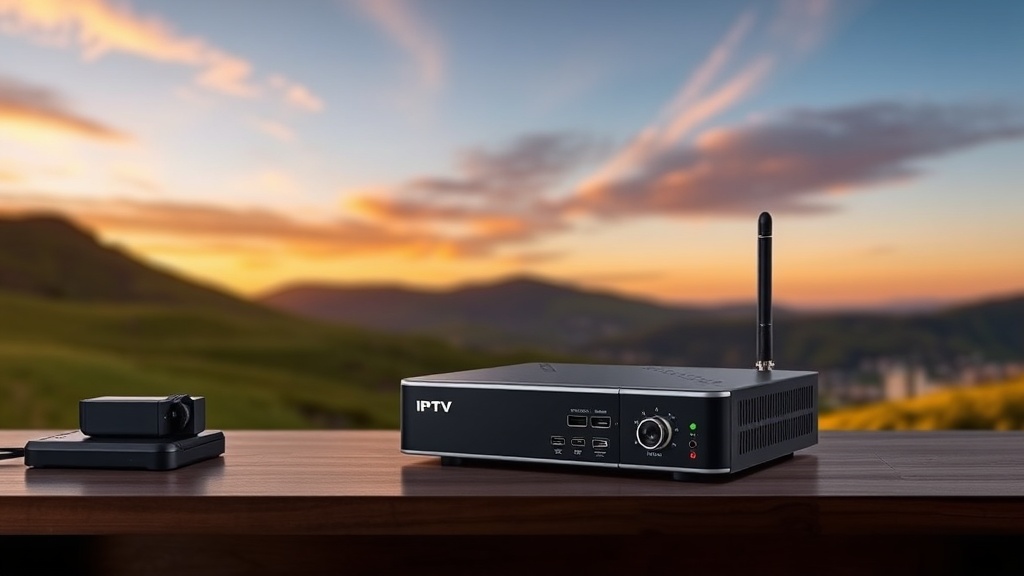
Achieving optimal performance with your Encoder IPTV setup requires careful planning and continuous optimization. One of the primary areas of focus should be bandwidth management. While encoders compress data, the sheer volume of high-definition content can still strain network resources. Implementing adaptive bitrate streaming is a powerful strategy to ensure smooth delivery across varying network conditions.
Codec selection is another critical factor. While H.264 is still widely used, transitioning to H.265 (HEVC) or even newer codecs like AV1 can significantly improve compression efficiency, reducing bandwidth requirements without sacrificing quality. This is particularly important for delivering 4K and 8K content, which demands substantial bandwidth if not efficiently compressed. Staying updated with the latest codec advancements is essential for any modern Encoder IPTV deployment.
Network infrastructure plays a pivotal role. A robust and reliable network is fundamental for delivering high-quality IPTV. This includes sufficient uplink and downlink speeds, low latency, and minimal packet loss. For large-scale operations, dedicated fiber optic connections and redundant network paths are often necessary to guarantee uninterrupted service. Regularly monitoring network performance and addressing bottlenecks proactively can prevent many common IPTV issues.
Furthermore, the choice of streaming protocol impacts performance. Protocols like HLS (HTTP Live Streaming) and DASH (Dynamic Adaptive Streaming over HTTP) are popular for their adaptive bitrate capabilities and widespread device support. Understanding the nuances of each protocol and selecting the one that best suits your content and audience is crucial for optimizing your Encoder IPTV delivery. For more details on supported devices, visit extraiptv.org/devices.
Advanced Features and Future Trends in Encoder IPTV
As we advance towards 2025, Encoder IPTV technology is not standing still. Advanced features like AI-powered encoding are emerging, promising even greater compression efficiency and intelligent content analysis. AI can optimize encoding parameters in real-time, adapting to scene complexity and viewer preferences, leading to superior visual quality at lower bitrates.
The rise of 5G networks is also set to revolutionize Encoder IPTV. With significantly higher bandwidth and lower latency, 5G will enable seamless delivery of ultra-high-definition content to mobile devices, opening new avenues for live streaming and interactive experiences. This will further blur the lines between traditional broadcasting and mobile content consumption, making Encoder IPTV an even more integral part of our digital lives.
Another significant trend is the integration of cloud-based encoding solutions. Cloud encoders offer scalability, flexibility, and reduced upfront costs, making them attractive for businesses of all sizes. They allow for dynamic scaling of encoding resources based on demand, which is particularly beneficial for handling peak traffic during major events. This shift to the cloud also facilitates easier integration with other cloud services, such as content management systems and analytics platforms.
Interactive IPTV experiences are also gaining traction. Beyond simple streaming, future Encoder IPTV systems will support features like multi-angle viewing, personalized content feeds, and real-time audience interaction. This transforms passive viewing into an immersive and engaging experience, driven by sophisticated encoding and delivery mechanisms. The evolution of Encoder IPTV is continuously pushing the boundaries of what’s possible in digital media.
Choosing the Right Encoder IPTV Solution for Your Needs
Selecting the appropriate Encoder IPTV solution requires a thorough assessment of your specific requirements, budget, and long-term goals. For small content creators or educational institutions, a software-based encoder might be sufficient, offering flexibility and affordability. These encoders can run on standard computer hardware, making them accessible for those with limited resources.
For larger enterprises, broadcasters, or those requiring 24/7 reliability and high-quality output, dedicated hardware encoders are often the preferred choice. These devices are purpose-built for video encoding, offering superior performance, stability, and advanced features like redundant power supplies and multiple input options. The investment in hardware often pays off in terms of consistent quality and reduced operational headaches.
Consider the types of content you will be encoding. Are you dealing primarily with live events, pre-recorded videos, or a mix of both? Live encoding demands low latency and high reliability, while VOD (Video on Demand) encoding allows for more processing time and can leverage more complex compression algorithms. The Encoder IPTV solution must align with your content strategy.
Scalability is another crucial factor. As your audience grows or your content library expands, your Encoder IPTV system must be able to scale accordingly. Cloud-based solutions offer inherent scalability, but even on-premise systems should be designed with future expansion in mind. Understanding your potential growth trajectory will help you make a future-proof decision. For a range of channels available, check out extraiptv.org/channels.
Ensuring Security and Reliability in Encoder IPTV Deployments
Security is paramount in any Encoder IPTV deployment. Protecting your content from unauthorized access and piracy is a critical concern, especially for premium content providers. Encryption technologies, such as AES (Advanced Encryption Standard), are essential for securing your streams. Digital Rights Management (DRM) systems provide an additional layer of protection, controlling how content can be accessed and used.
Reliability is equally important. An Encoder IPTV system must be robust enough to handle continuous operation without interruption. This involves implementing redundancy at various levels, from power supplies and network connections to encoding hardware itself. Failover mechanisms ensure that if one component fails, a backup automatically takes over, minimizing downtime and maintaining service continuity.
Monitoring and management tools are indispensable for maintaining a reliable Encoder IPTV system. These tools allow operators to track stream health, identify potential issues, and troubleshoot problems in real-time. Proactive monitoring can help prevent outages and ensure a consistent, high-quality viewing experience for your audience. Regular maintenance and software updates are also crucial for security and performance.
Furthermore, adherence to industry standards and best practices is vital. This includes compliance with streaming protocols, video codecs, and security standards. Working with reputable vendors and service providers who have a proven track record in Encoder IPTV deployments can significantly enhance the security and reliability of your system. Explore our pricing options for reliable services.
Troubleshooting Common Encoder IPTV Issues
Even with the most meticulously planned Encoder IPTV setup, issues can arise. Understanding how to troubleshoot common problems is essential for minimizing downtime and ensuring a smooth viewing experience. One of the most frequent complaints is buffering. This can be caused by insufficient bandwidth, network congestion, or an inefficient encoder configuration. Checking your internet speed, optimizing encoder settings, and considering a CDN can often resolve buffering issues.
Poor video quality, including pixelation or artifacts, is another common problem. This often points to an issue with the encoder settings, such as an excessively low bitrate for the chosen resolution, or problems with the content source itself. Ensuring that your encoder is configured to match the quality of your source material and your target audience’s capabilities is crucial. Sometimes, simply increasing the bitrate or using a more efficient codec can make a significant difference.
Audio synchronization issues, where the audio and video are out of sync, can be particularly frustrating for viewers. This can stem from encoding delays, network latency, or problems with the playback device. Checking encoder settings for audio delay compensation, ensuring consistent frame rates, and testing on different playback devices can help pinpoint the cause. Sometimes, a simple restart of the encoder or playback device can resolve minor sync issues.
Connection drops or complete loss of service are more severe issues that require immediate attention. These can be indicative of network failures, encoder malfunctions, or issues with the streaming server. Thoroughly checking all network cables, verifying encoder status, and contacting your streaming service provider are the first steps in diagnosing such problems. Maintaining detailed logs and monitoring system health can greatly assist in rapid troubleshooting of Encoder IPTV systems.
The Future of Encoder IPTV: Innovation and Accessibility
The landscape of Encoder IPTV is continuously evolving, driven by relentless innovation and the growing demand for accessible, high-quality digital content. We anticipate even more sophisticated AI and machine learning integrations within encoders, enabling real-time content analysis for personalized delivery and automated quality control. This will lead to an even more refined and tailored viewing experience for every individual.
The push towards greater accessibility will also shape the future of Encoder IPTV. This includes enhancing support for various accessibility features like closed captions, audio descriptions, and sign language interpretation embedded directly into the encoded streams. Making content inclusive for all audiences will become an even higher priority, with encoders playing a crucial role in delivering these features seamlessly.
Edge computing is another frontier for Encoder IPTV. By moving some encoding and processing tasks closer to the network edge, latency can be further reduced, and bandwidth efficiency improved. This will be particularly beneficial for interactive applications, live gaming, and immersive VR/AR experiences that demand ultra-low latency and high-fidelity streaming. The distributed nature of edge computing complements the global reach of IPTV.
Ultimately, the future of Encoder IPTV is about delivering unparalleled content experiences, regardless of location, device, or network conditions. From ultra-high-definition broadcasts to interactive, personalized streams, encoders will remain at the heart of this revolution, continuously adapting to new technological advancements and evolving consumer expectations. The journey of Encoder IPTV is far from over; it’s just getting more exciting.
FAQs About Encoder IPTV
What is the primary function of an Encoder IPTV?
The primary function of an Encoder IPTV is to convert raw video and audio signals into a compressed, digital format suitable for transmission over an Internet Protocol (IP) network. This allows content to be streamed efficiently to various devices.
What are the main types of encoders used in IPTV?
The main types of encoders used in IPTV are hardware encoders and software encoders. Hardware encoders are dedicated devices offering high performance and reliability, while software encoders run on general-purpose computers, providing flexibility and cost-effectiveness.
Why is adaptive bitrate streaming important for Encoder IPTV?
Adaptive bitrate streaming is crucial for Encoder IPTV because it allows the system to deliver multiple versions of a stream at different bitrates and resolutions. This ensures that viewers receive the optimal quality stream based on their internet speed and device capabilities, preventing buffering and improving the overall viewing experience.
How does 5G impact Encoder IPTV?
5G significantly impacts Encoder IPTV by providing higher bandwidth and lower latency. This enables the seamless delivery of ultra-high-definition content to mobile devices, enhances live streaming capabilities, and opens new possibilities for interactive and immersive mobile experiences.
What security measures are essential for an Encoder IPTV deployment?
Essential security measures for an Encoder IPTV deployment include content encryption (e.g., AES) to protect against unauthorized access, and Digital Rights Management (DRM) systems to control content usage. Additionally, secure network configurations and regular software updates are vital for maintaining system integrity.
Related IPTV Services
You may also visit the following websites for similar services: